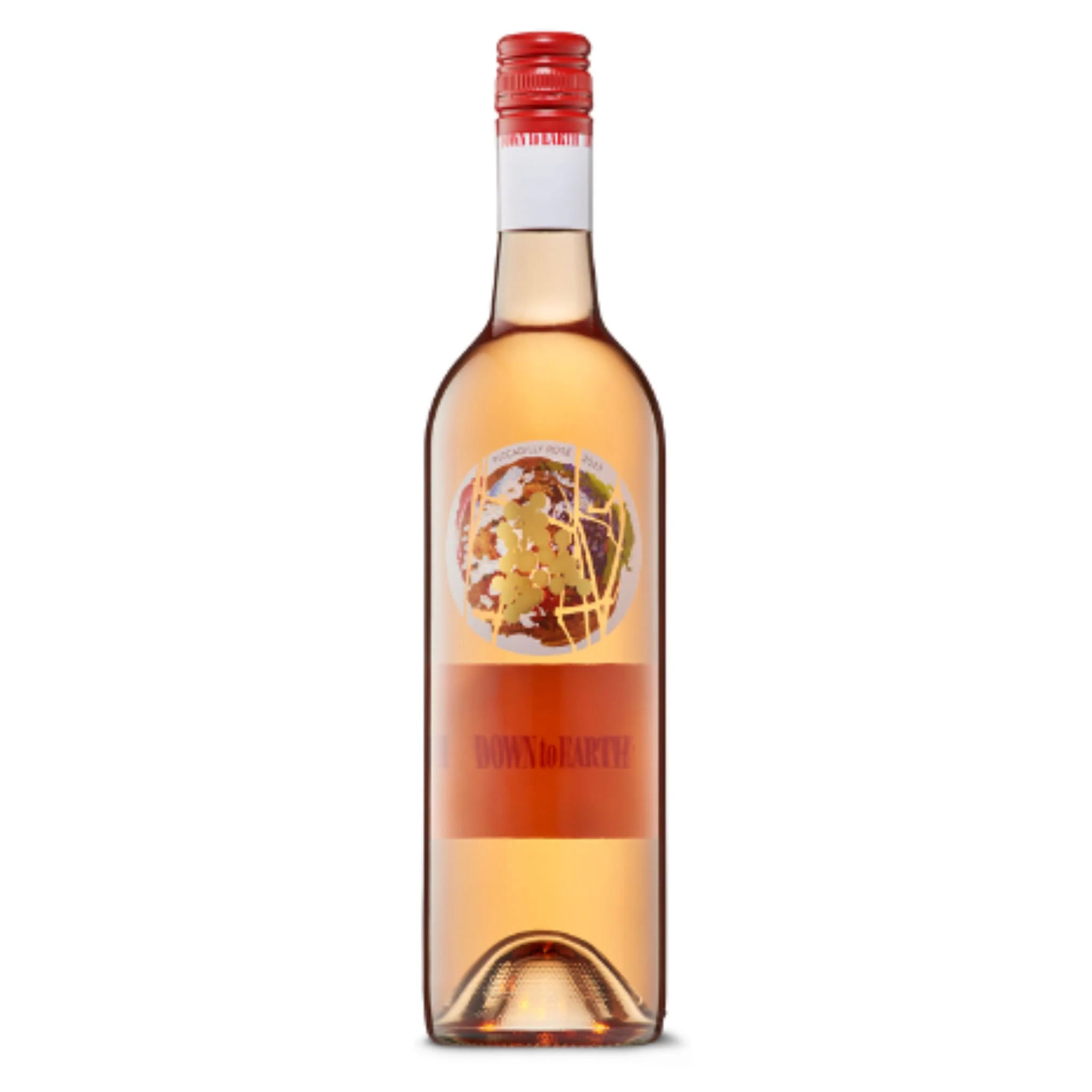
Terre a Terre Down To Earth Rose
Tasting notes from the producer
This exceptional vineyard is perched on the crest of a north-south oriented, 35-million-year-old Oligocene limestone ridge, covered by terra rossa soil. On its eastern slope, a layer of Bridgewater eolian sands overlays the ancient terra rossa. During the pre-planting soil preparation, an entrance to a limestone cave network was discovered, inspiring the vineyard's name, Crayères. (Crayères, derived from "craie" – the French word for limestone – refers to the underground cave networks found in the Champagne wine region.) The Crayères cave houses undisturbed fossilized remains of ancient megafauna, which are unique globally and will be the focus of extensive future research.
Tasting notes from the producer
This exceptional vineyard is perched on the crest of a north-south oriented, 35-million-year-old Oligocene limestone ridge, covered by terra rossa soil. On its eastern slope, a layer of Bridgewater eolian sands overlays the ancient terra rossa. During the pre-planting soil preparation, an entrance to a limestone cave network was discovered, inspiring the vineyard's name, Crayères. (Crayères, derived from "craie" – the French word for limestone – refers to the underground cave networks found in the Champagne wine region.) The Crayères cave houses undisturbed fossilized remains of ancient megafauna, which are unique globally and will be the focus of extensive future research.
Original: $29.47
-70%$29.47
$8.84Description
Tasting notes from the producer
This exceptional vineyard is perched on the crest of a north-south oriented, 35-million-year-old Oligocene limestone ridge, covered by terra rossa soil. On its eastern slope, a layer of Bridgewater eolian sands overlays the ancient terra rossa. During the pre-planting soil preparation, an entrance to a limestone cave network was discovered, inspiring the vineyard's name, Crayères. (Crayères, derived from "craie" – the French word for limestone – refers to the underground cave networks found in the Champagne wine region.) The Crayères cave houses undisturbed fossilized remains of ancient megafauna, which are unique globally and will be the focus of extensive future research.